
From a small city in India to leading-edge cardiovascular genomics in Boston, Dr. Sangita Choudhury’s journey is one of persistence, curiosity, and vision. A microbiologist turned heart researcher, she leads a lab uncovering how our hearts change from birth to aging—mapping every cell, mutation, and molecular shift along the way. By combining single-cell and spatial genomics, her work explores why the human heart loses its ability to regenerate and how that knowledge could one day restore it. Guided by passion and intuition, Dr. Choudhury is not just studying the heart—she’s redefining what it means for it to heal.
Where are you from, and what inspired your journey into science?
Sangita Choudhury: I was born in a small city in India in the 1980s. My parents were both teachers, and while having a second daughter was not considered fortunate at the time, they believed deeply in education. They made the bold decision not to save money for a wedding, but to invest in my education instead. That choice changed everything for me.
As a teenager, I discovered microbiology almost by chance. I was fascinated by microbes under the microscope—watching them move, reproduce, and interact with each other. I could spend hours at the bench, and it never felt like work. This fascination drove me to study microbiology for five years. Later, I shifted to cancer biology during my master’s studies, where I realized that I wanted to pursue research with direct implications for health.
Eventually, I found myself drawn to cardiovascular research. What excited me was not just studying disease, but bringing together new technologies to answer biological questions that had never been addressed before. My path was not linear, but every step taught me something valuable.
At what age did you know you wanted to be a scientist?
Sangita Choudhury: By fourth grade, I knew that science was my future. The school library was my refuge—I read everything I could find, even if I didn’t fully understand it. Unlike other children who looked forward to trips or vacations, I often preferred staying behind with a stack of books.
In sixth grade, I carried out my first experiment at home: dissecting a frog. My mother encouraged me, even though my father thought it was outrageous. Seeing the organs inside the frog sparked a lifelong curiosity about how living systems work. That moment, more than any other, solidified my identity as a future scientist.
As I grew older, I fought hard to pursue education outside my hometown. My parents supported me despite limited finances, sending me to boarding school and then university in another state. Their sacrifices, especially my mother’s unwavering belief, laid the foundation for my career.
Who were your biggest influences along the way?
Sangita Choudhury: My mother has always been my greatest supporter. She was fearless and believed in me when others doubted. She encouraged me as a child when I wanted to explore science, and as an adult when I faced career crossroads. Even today, she travels to help me whenever I am overwhelmed by professional or family responsibilities.
Beyond family, I was fortunate to have incredible mentors. In Germany, my PhD advisor encouraged me to pursue innovative technologies, even when they seemed risky. In Boston, Bernard Kühn introduced me to single-cell approaches in cardiovascular research, and Chris Walsh welcomed me into his lab when I was transitioning to independence. Each mentor gave me not only technical guidance but also confidence in my own ideas. Their support taught me that science is never a solo journey—it is built on networks of encouragement and trust.
What values guide your work in science and life?
Sangita Choudhury: I am guided by passion, persistence, and intuition. Passion is essential because science is too demanding to succeed without it. Persistence is equally critical—experiments fail, grants are rejected, and papers can take years to publish. Without persistence, even brilliant ideas can fade away.
Intuition guides me in asking the right questions. Often, progress comes from trusting a hunch, even when others doubt it. But passion, persistence, and intuition are not enough on their own. Mentorship, family support, and luck are also vital. I have experienced moments when everything seemed to collapse, only to find that a mentor’s belief or a well-timed opportunity changed my path.
I also believe that no effort is wasted. A failed experiment today often becomes the foundation for tomorrow’s breakthrough. This perspective keeps me motivated even in the most challenging times.
Tell us about your current research focus.
Sangita Choudhury: My lab studies how the human heart changes at the genomic and transcriptomic level across development, aging, and disease. We combine cutting-edge technologies, whole genome and duplex sequencing, single-cell RNA sequencing and spatial transcriptomics to build comprehensive maps of heart cells to decipher how heart cells evolve over time. Using these high-resolution approaches, we examine how somatic genomic alterations change the genomic landscape in an organ- and cell-specific manner- and how these changes influence organ function and repair.
For example, how does a newborn heart differ from an aging one? What changes occur in cardiomyocytes during heart failure? By building these maps, we can begin to understand what makes a heart cell resilient—or vulnerable.
The ultimate goal is ambitious: to identify ways to preserve heart health for longer and to reactivate regenerative pathways that fade after childhood.
For a general audience, what does ‘polyploidy’ mean, and why does it matter for the heart?
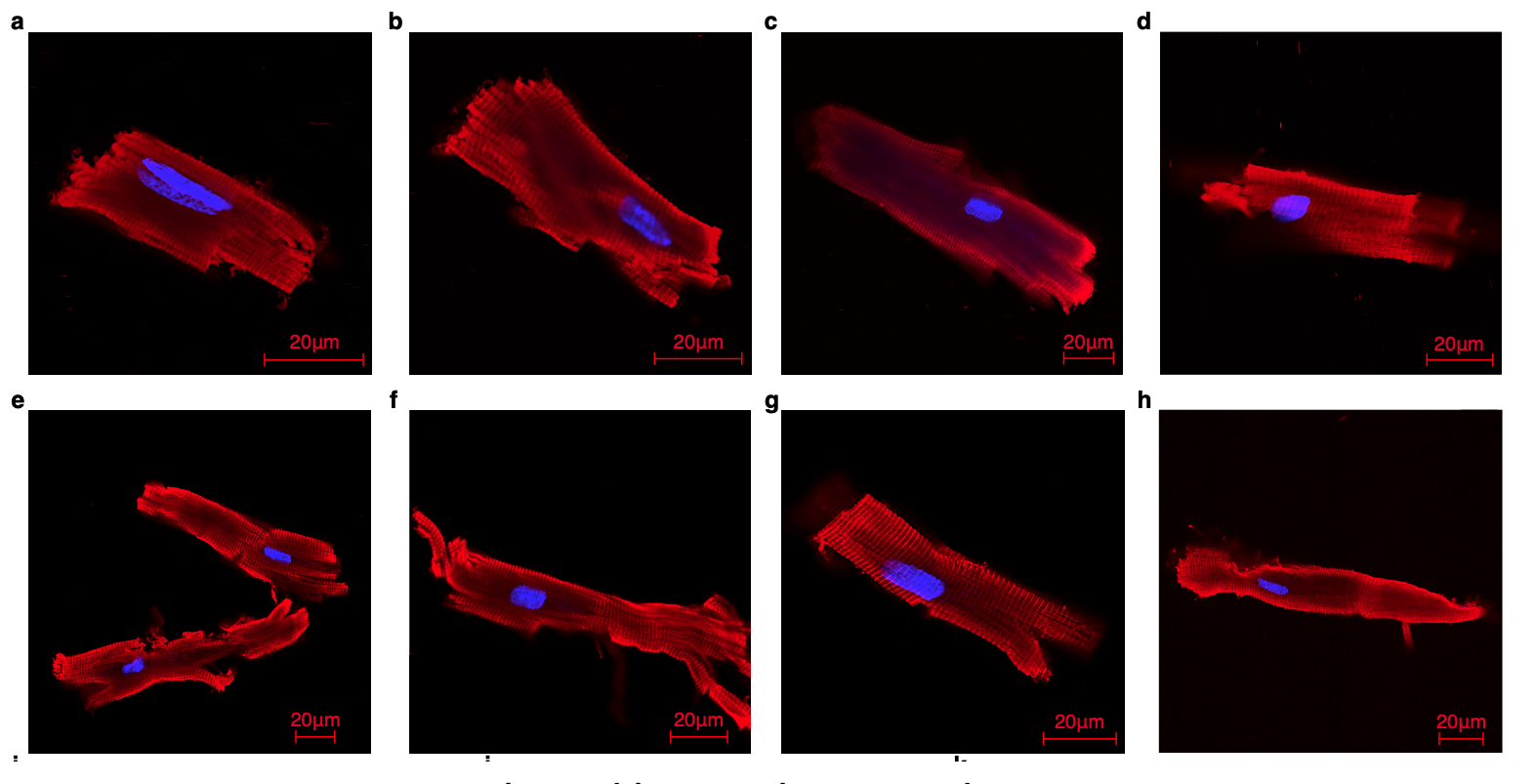
Sangita Choudhury: Polyploidy refers to cells that contain more than two complete sets of chromosomes. Most cells in the human body are diploid, meaning they have two sets. Heart muscle cells, however, often have extra sets—four, six, or even more. Some also have multiple nuclei.
This unique feature of heart cells is one reason they behave differently from cells in other tissues. For example, zebrafish heart cells remain diploid, and zebrafish can regenerate their hearts after injury. Human heart cells, with their higher polyploidy, cannot.
Understanding why polyploidy develops in human hearts and what role it plays in limiting regeneration could hold the key to new therapies. It may even help explain why certain heart diseases progress the way they do.
What challenges come with studying polyploid cells?
Sangita Choudhury: Studying polyploid cells presents both conceptual and technical challenges.
Conceptually, polyploidy raises fascinating questions. Polyploid cells could be generated in many different ways, and different routes to polyploidization may result in different outcomes. Cancer cells, which often become polyploid, an indication of genome instability, continue to divide, while polyploid heart muscle cells cannot divide. Why does polyploidy seem to protect against certain stresses in some tissues but cause vulnerability in others?
These puzzles continue at technical level too, most genomic analysis tools assume that cells are diploid. When cells have four or more chromosome sets, these tools give misleading results. This means we must adapt methods or build new tools entirely.
The heart of our research. Solving them could lead not only to new treatments for heart disease but also to broader insights into cell biology.
What have you learned about how mutations accumulate in heart cells?
Sangita Choudhury: Even though cardiomyocytes stop dividing after early childhood, their DNA is constantly under pressure from metabolism and oxidative stress. This stress leads to mutations, which accumulate over time. Because these cells do not regenerate, they retain mutations permanently, acting almost like a diary of the cell’s life.
We have found that in diseases like ischemic heart failure, the mutation burden is significantly higher than in healthy hearts. This suggests that accumulated mutations may contribute to the disease processes. In the future, such patterns could help us predict risk, diagnose disease earlier, or develop therapies that protect against DNA damage.
How do you see your research translating to patient care?
Sangita Choudhury: Fundamental biology is the first step toward clinical impact. Without understanding how heart cells function at the most basic level, we cannot design effective treatments. By mapping genomic and transcriptomic changes in the heart, we hope to identify targets that could be used to preserve heart function or trigger regeneration.
In addition, our work with congenital heart disease patients provides direct clinical context. Seeing how malformations develop in children gives us clues about what goes wrong in development and how those processes might be corrected. It is a reminder that research is not an abstract exercise—it has direct implications for patients and families.
What scientific achievement are you most proud of?
Sangita Choudhury: I am especially proud of pioneering work that integrates cardiovascular biology, molecular techniques, and bioinformatics into a single framework. Early in my career, I helped develop ways to analyze individual heart cells at unprecedented resolution. These projects often took years to complete but demonstrated that it was possible to study the heart with the same granularity as cancer or neuroscience.
This integration has opened the door for new collaborations and inspired other labs to adopt similar approaches. To me, that is the mark of an impactful achievement—not just personal success, but influencing the direction of the field.
If you weren’t a scientist, what would you be?
Sangita Choudhury: If I were not a scientist, I would be a writer. Science and writing share a common thread: storytelling. Science builds narratives from data, while writing builds them from imagination. If I were not at the bench, I would still want to explore ideas and share them with others through words.
How can people follow your work?
Sangita Choudhury: The best place is our lab website, where we post updates on publications, projects, and opportunities. While I am not very active on social media, I recognize the importance of communicating science more broadly. We are working to make our website a place where colleagues and the public alike can learn what we are doing and why it matters.